
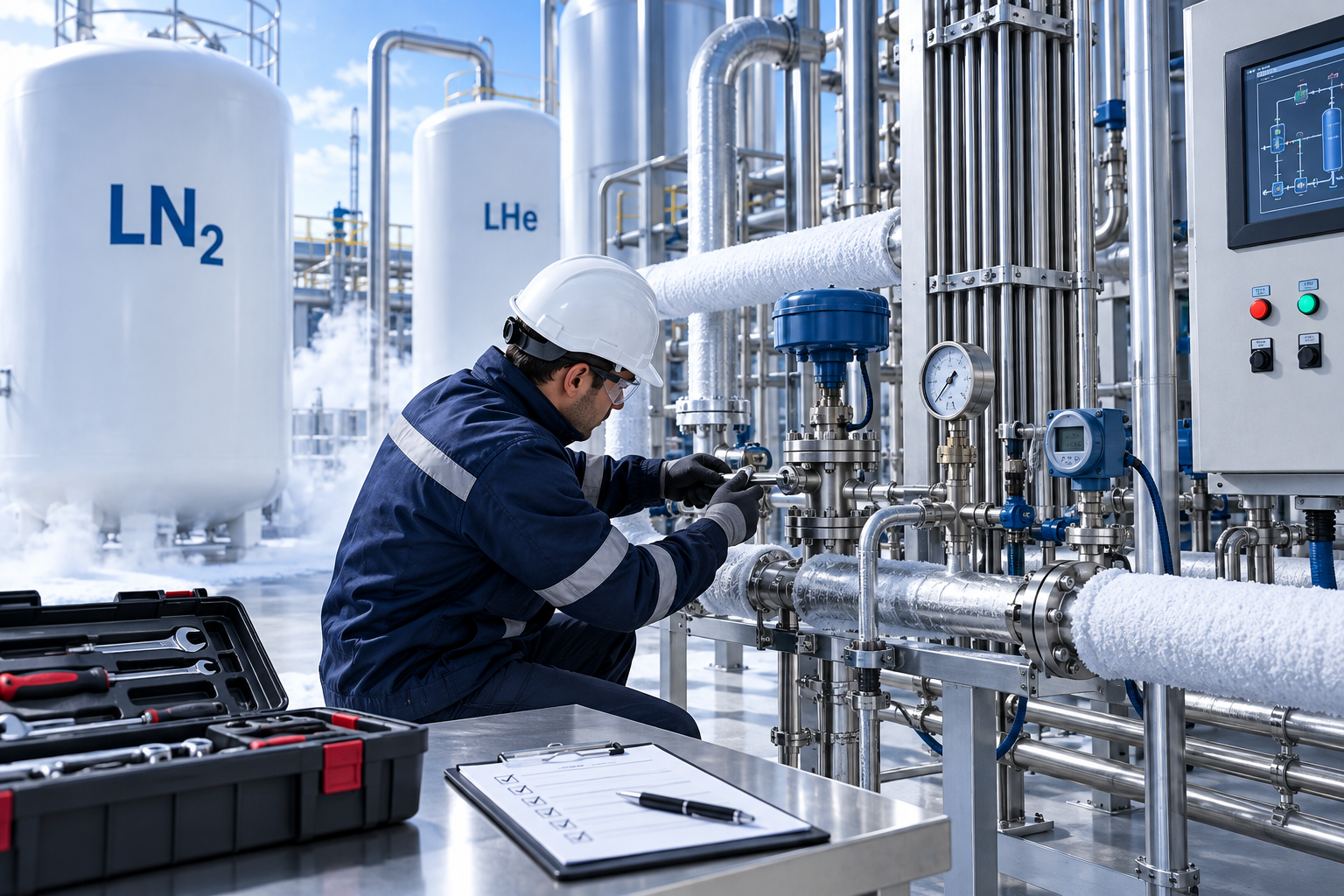
Cryogenic System Maintenance: What You Need to Know
Cryogenic equipment is designed to operate under demanding temperature, pressure and operating conditions. Like any precision engineering system, regular maintenance is important for maintaining reliable performance.
A well-maintained cryogenic system can help identify potential problems early, reduce unexpected downtime and support consistent operation.
Whether the system includes a helium compressor, cryocooler, transfer lines or other cryogenic components, maintenance should be approached systematically.
Why Is Cryogenic System Maintenance Important?
Cryogenic systems often operate continuously for extended periods.
Small issues that might appear insignificant at normal temperatures can become more important in a cryogenic environment.
Regular maintenance can help with:
- Reliable system operation
- Early fault detection
- Reducing unplanned downtime
- Extending equipment service life
- Maintaining leak-tight connections
1. Check Helium Connections for Leaks
Helium leak prevention is one of the most important considerations in a helium-based cryogenic system.
Connections, hoses, couplings and fittings should be inspected regularly for signs of leakage.
Specialized self-sealing couplings and properly tested helium lines can help maintain system integrity.
RJ Instruments provides helium transfer hoses with Parker Aeroquip self-sealing couplings for helium-handling applications.
2. Monitor Operating Pressure
The high-pressure and low-pressure sides of the system should be monitored during operation.
Unexpected pressure changes can indicate possible issues such as:
- Leakage
- Flow restrictions
- Compressor problems
- Connection issues
- Abnormal system conditions
Keeping records of normal operating pressure can also make it easier to identify changes over time.
3. Monitor Temperature
Temperature is one of the most important indicators of cryogenic system performance.
Operators should monitor relevant temperature points and compare readings with expected operating conditions.
A gradual change in cooling performance may indicate that the system requires inspection or maintenance.
4. Maintain the Compressor
The helium compressor is a critical part of a closed-cycle cryogenic system.
Maintenance should follow the equipment manufacturer’s recommended service procedures.
Depending on the compressor design, maintenance may involve inspection of:
- Mechanical components
- Electrical connections
- Cooling system
- Helium connections
- Filters and other serviceable components
For the HelioPulse3k, RJ Instruments specifies a 10,000-hour MTBS/service interval.
5. Check Cooling Water
Where a water-cooled compressor is used, cooling-water flow and temperature should be maintained within the specified operating range.
Insufficient water flow or unsuitable water temperature can affect compressor operation and overall system performance.
For HelioPulse3k, the catalogue specifies cooling water at 7 LPM at 11°C.
6. Inspect Hoses and Transfer Lines
Cryogenic hoses and transfer lines should be checked for:
- Physical damage
- Loose connections
- Signs of wear
- Leakage
- Abnormal movement
- Deterioration of fittings
A damaged transfer line can affect both system performance and operational safety.
7. Keep the System Clean
Dust, contamination and poor housekeeping around cryogenic equipment can create maintenance problems.
The surrounding equipment area should be kept clean and accessible so that inspections and servicing can be performed efficiently.
8. Maintain Proper Operating Conditions
Cryogenic equipment should be operated within its specified environmental and operating limits.
For example, HelioPulse3k is specified for an operating temperature range of 5°C to 45°C.
Operating equipment outside its specified conditions can affect reliability and performance.
9. Follow Preventive Maintenance
Waiting for equipment to fail is generally less desirable than following a preventive maintenance program.
A preventive maintenance schedule can include:
Daily / Routine Checks
- Pressure readings
- Temperature readings
- Unusual noise or vibration
- Cooling-water conditions
- Visible leakage
Periodic Checks
- Hose and coupling inspection
- Electrical connections
- Compressor condition
- Refrigeration performance
- General equipment condition
Scheduled Service
- Manufacturer-recommended servicing
- Replacement of service components
- Detailed inspection and testing
10. Maintain Service Records
Maintenance records provide valuable information about equipment history.
A good maintenance record can include:
- Date of inspection
- Operating hours
- Pressure readings
- Temperature readings
- Maintenance performed
- Parts replaced
- Observed problems
- Next scheduled service
This information can help engineers identify recurring issues and plan future maintenance.
Field Serviceability Matters
Cryogenic equipment can sometimes be installed in research laboratories or industrial environments where equipment downtime is costly.
Equipment designed with serviceability in mind can make maintenance more practical.
The HelioPulse3k has been designed with an emphasis on field serviceability, and its stated features include the use of market-available components and locally available spares.
When Should You Contact a Cryogenic Equipment Specialist?
Professional assistance should be considered when you observe:
- Unexpected pressure changes
- Reduced cooling performance
- Persistent helium leakage
- Abnormal noise or vibration
- Repeated system shutdowns
- Unusual temperature behavior
- Electrical faults
- Damage to hoses or connections
Early technical evaluation can help determine whether the issue is related to the compressor, refrigerator, transfer system or another part of the installation.
Conclusion
Regular maintenance is an important part of operating a reliable cryogenic refrigeration system.
Monitoring pressure and temperature, checking helium connections, maintaining cooling-water conditions, inspecting transfer lines and following scheduled compressor servicing can help support long-term system performance.
For specialized cryogenic applications, maintenance requirements should always be based on the specific equipment manufacturer’s instructions and operating specifications.